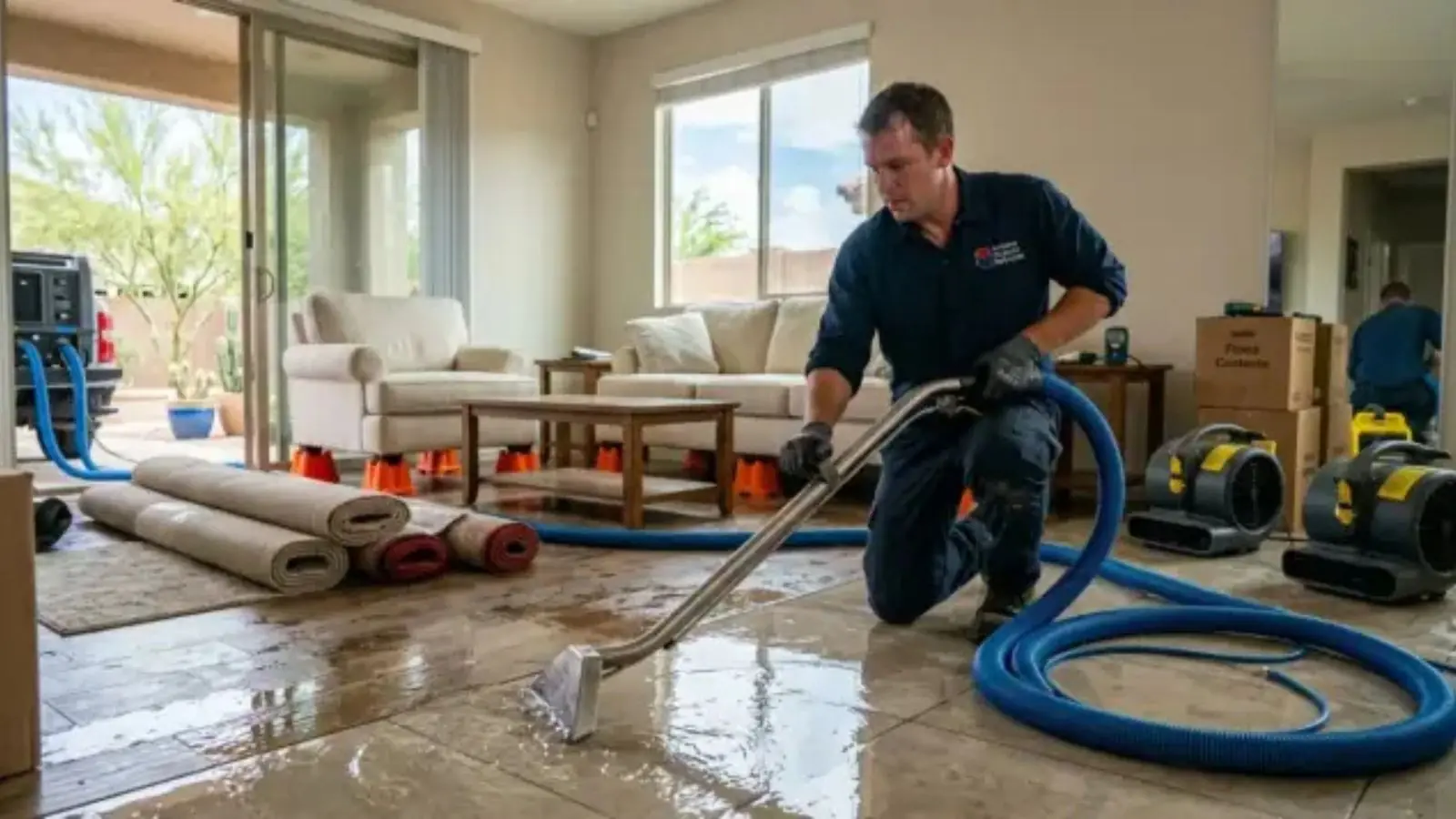
Water Damage Restoration
in Laguna Hills, CA
Water damage restoration in Laguna Hills, CA starts with one call. Dispatch is open day and night for burst pipes, ceiling leaks, storm water and sewage backups, and a crew is sent the same day when one is available.
Laguna Hills at a glance
Active water, ceiling leak or sewage backup?
The dispatch line is answered around the clock. If the source is still running, shut off the main water valve first, then call.
What we handle in Laguna Hills
Each service below has its own page, because a wet ceiling, a flooded garage and a moldy closet call for different crews, equipment and decisions.
Water Damage Repair
Drywall, flooring, paint and trim rebuilt after the structure is dry, including ceiling and wall repairs from upstairs leaks.
View service →Emergency Water Removal
Pumps and extraction units pull standing water from floors and carpet when a pipe bursts or a drain backs up.
View service →Water Mitigation
The first 24 to 72 hours: stopping the spread, mapping moisture, and setting drying equipment before materials fail.
View service →Water Damage Cleanup
Removing wet debris and ruined materials, then sanitizing and deodorizing the affected rooms.
View service →Flood Damage Restoration
Storm runoff, creek-side flooding, garage and lower-level water, and sewage backups handled with the right safety steps.
View service →Mold Remediation
Containment, removal and cleaning of mold growth, done after the moisture source is found and fixed.
View service →Water damage restoration in Laguna Hills, CA, explained
Water damage restoration is the work of removing water, drying the structure and contents, cleaning what can be saved, and rebuilding what cannot. In Laguna Hills the job usually begins with a plumbing failure, a roof or window leak during a winter storm, or an appliance line that gives way while no one is home.
Laguna Hills incorporated as a city on December 20, 1991, but its land has a longer story. Rancho Niguel became the Moulton Ranch, and the ranch was subdivided in the early 1960s, according to the city's own history page. Homes built across those decades carry different pipes, roof ages and slab or raised foundations, so the repair plan changes from one street to the next.
The city's adopted Safety Element notes expansive soils and shallow groundwater along Sulphur, Aliso and Oso Creeks. That matters for flooded garages and ground-floor rooms near creek corridors, and it is one reason a damp wall should be checked for the source before anyone paints over it.
When a wet room becomes an emergency
Water spreads faster than most people expect. Within a day it wicks up drywall, soaks carpet pad and works under baseboards. The EPA advises drying water-damaged areas within 24 to 48 hours to prevent mold growth, so a phone call tonight beats a phone call next week.
Call 24/7 dispatch when water is still flowing, when it came through a ceiling, when it covers more than a single room, or when it smells like sewage. If you see water near outlets, panels or light fixtures, stay clear. Cut power at the panel only if you can reach it dry, and call 911 or your utility first for any electrical or gas concern.
What you can expect on the phone and on site
24/7 dispatch
The line is answered at night, on weekends and on holidays, and a crew is sent the same day when one is available.
Scope and price first
Before work starts, the scope is explained and how the price is set. Ask any question you have before you agree.
Claim documentation
Moisture readings, photos and a written scope help you and your insurer see what was damaged and what was done.
Licensed and insured
Crews are licensed and insured. You can also verify any contractor with the California Contractors State License Board.
From first call to a dry, repaired home
Call dispatch
Describe where the water is coming from and how far it has spread. Dispatch will tell you what to do while you wait.
Assess
A technician finds the source, checks moisture with meters and thermal imaging, and explains the scope.
Mitigate and dry
Water is extracted, wet materials are removed, and air movers and dehumidifiers run until readings are dry.
Repair
Drywall, flooring, paint and trim are rebuilt once the structure meets drying goals.
Which kind of water is it?
The water category changes what must be thrown away and how the room is cleaned. These three categories follow the framework in ANSI/IICRC S500, the published standard for water damage restoration.
| Category | Typical source | What it usually means |
|---|---|---|
| Category 1 (clean) | Supply line, faucet, rain through a roof leak | Dry in place if caught early. Porous materials may still be removed if they stay wet. |
| Category 2 (gray) | Washing machine or dishwasher discharge, toilet overflow with no solids | Cleaned and sanitized. Carpet pad and some drywall are often removed. |
| Category 3 (black) | Sewage, creek or ground-surface flood water | Stay out. Contaminated porous materials are removed and the area is disinfected. |
Category 2 water left standing for about 48 hours can be treated as Category 3, so waiting makes the job bigger. Read more about storm and sewage cases before you decide how to handle them yourself.
What shapes the price of a water damage job
No honest company can name a number without seeing the damage. These are the five things that move the price most, and the crew will walk through each one with you.
Water category
Clean, gray and black water are handled differently. Contaminated water adds containment, disposal and disinfecting steps.
Area affected
One bathroom and a whole first floor are different jobs. Moisture mapping shows how far the water actually traveled.
Materials involved
Hardwood, laminate, carpet, drywall and insulation dry or fail in different ways, which sets what is saved and what is replaced.
Drying days and equipment
More air movers and dehumidifiers running for more days raises the cost. Readings decide when drying stops.
Rebuild scope
Mitigation stops the damage. Rebuilding drywall, floors, paint and cabinets is priced separately once drying is done.
Want your real number? Call dispatch or ask on the first call how the scope will be priced.
Working with your policy and your adjuster
Documentation that supports your claim
Sudden and accidental water damage is often covered by a homeowners policy, while gradual leaks and neglect often are not. Flood damage from outside water is generally excluded and needs a separate flood policy, according to the California Department of Insurance. Check your policy or ask your insurer what applies to you.
Report the loss promptly, photograph the damage, keep receipts for emergency steps, and wait for the adjuster before permanent repairs. We record moisture readings and photos as work proceeds so your file is complete. We do not decide coverage and cannot promise a claim will be approved.
Laguna Hills and the cities around it
Dispatch starts in Laguna Hills at the Ridge Route address and reaches the neighboring South Orange County cities below along I-5, El Toro Road, Alicia Parkway and Moulton Parkway.
Laguna Hills water damage FAQs
Yes. The dispatch line at (949) 670-0939 is answered 24 hours a day, including weekends and holidays. A crew is sent the same day when one is available, and dispatch will tell you what to do while you wait.
Stop the source if you safely can, usually by turning off the main water valve. Move valuables out of the wet area, keep people and pets out of contaminated water, and photograph the damage for your insurer. Skip the panel if the floor around it is wet.
Minor leaks often dry in a few days, while larger losses take longer because drying continues until moisture readings return to normal. Ask the technician how many days the equipment is expected to run and what the readings will show.
It depends on the cause. Sudden and accidental water damage is often covered, and flood from outside is usually excluded without a separate flood policy. Read your policy or ask your insurer, and see our insurance notes on the water mitigation page.
Yes. Mold needs moisture, so the leak is fixed first and the area is contained before removal. Our mold remediation page explains the process and the S520 standard.
We serve Mission Viejo, Lake Forest, Aliso Viejo, Laguna Woods and Laguna Niguel. Each town has its own page, starting with Mission Viejo and Aliso Viejo.
Water spreading right now?
Call the 24/7 dispatch line. Tell us where the water is and we will tell you what to do next.
Call (949) 670-0939